NVIDIA's H200: The Memory Monster Upgrading AI Infrastructure Without Starting Over
The H200 packs 141GB of memory and 4.8 TB/s bandwidth into the familiar Hopper architecture—offering a practical upgrade path for data centers not ready to jump to Blackwell.

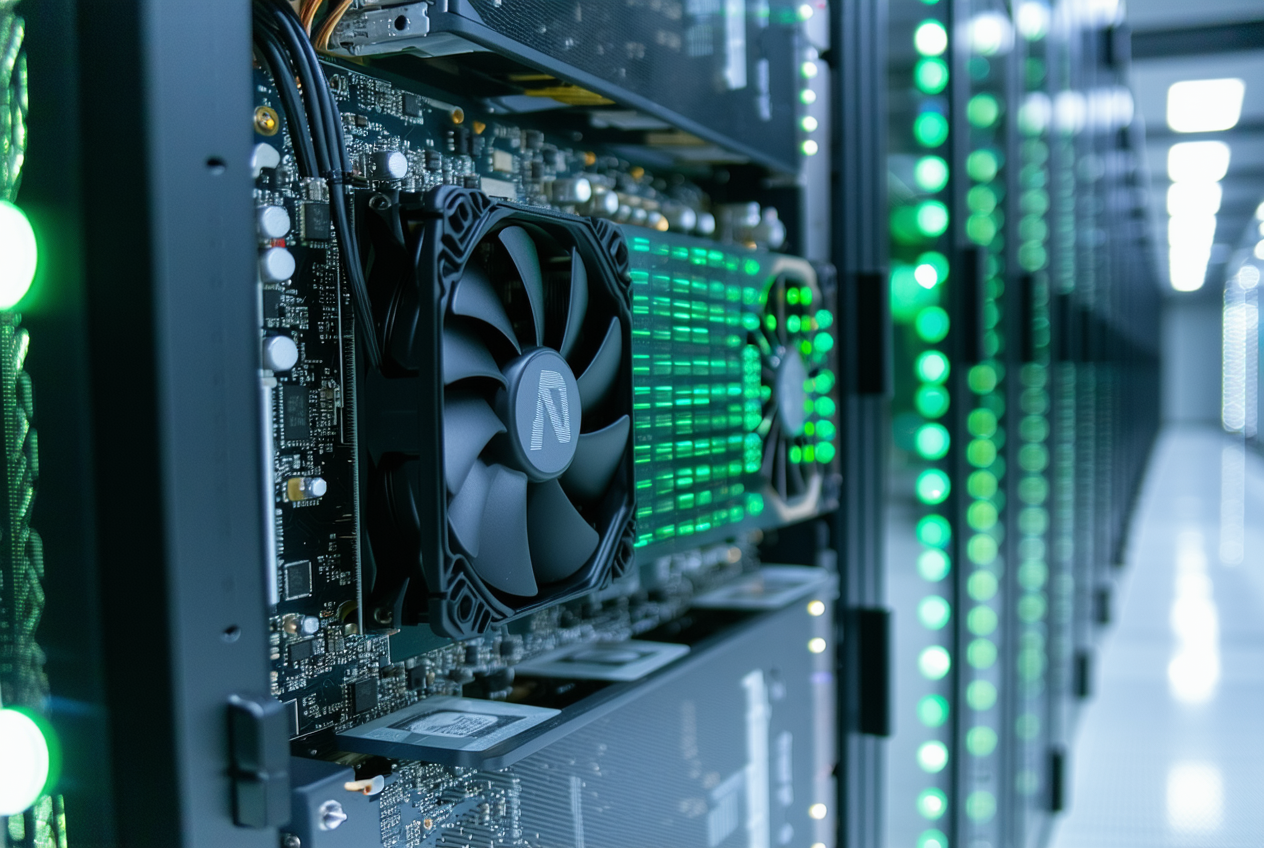
The H200 packs 141GB of memory into the same Hopper architecture—offering a practical upgrade path for data centers not ready to jump to Blackwell
NVIDIA's product cycles move fast. Too fast, sometimes, for enterprise infrastructure teams trying to keep up. Enter the H200—a GPU that looks like a modest refresh on paper but solves a very real problem: what do you do when your AI models are outgrowing your hardware, but you're not ready to rebuild around a completely new architecture?
Released in November 2024, the H200 takes everything familiar about the H100 and cranks up the memory. We're talking 141GB of HBM3e—up from 80GB—and bandwidth jumping from 3.35 TB/s to 4.8 TB/s. That's 76% more memory and 43% more bandwidth in the same physical package, using the same GH100 die.
Why Memory Matters More Than Ever
Modern AI workloads are memory-hungry beasts. Large language models like GPT-3.5, Llama 2, and their successors need every byte they can get—especially during inference, where context windows keep expanding.
The H200's memory bump isn't just about fitting bigger models. It's about throughput. More memory means you can process larger batches or longer sequences without hitting the dreaded out-of-memory wall. For companies running inference APIs or batch processing jobs, that translates directly to lower cost per token.
Cloud providers like Spheron and OpenMetal have already started offering H200 instances, with on-demand pricing hovering around $4.30–$4.80 per hour (dropping to ~$1.80/hour for spot instances). That 25–30% premium over H100 pricing looks steep until you factor in the performance gains for memory-bound workloads.
Same Architecture, Fewer Headaches
Here's where NVIDIA played it smart. The H200 uses the exact same Hopper architecture as its predecessor. Same CUDA cores, same instruction sets, same software stack. If your code runs on H100, it runs on H200—no recompilation, no compatibility headaches, no retooling your entire pipeline.
This matters because architecture transitions are expensive. Moving from Ampere to Hopper required software validation, potential code changes, and staff retraining. The H200 sidesteps all of that. It's a drop-in upgrade that slots into existing HGX servers and works immediately with the NVIDIA AI Enterprise platform (which added H200 support in April 2025).
The Competition Context
AMD's Instinct MI300 series has been gaining traction, offering competitive memory capacities (up to 160GB) and bandwidth figures in the same ballpark. But NVIDIA's ecosystem lock-in remains formidable—CUDA dominates AI infrastructure, and the H200 leverages every bit of that advantage.
For companies already invested in the NVIDIA stack, the H200 represents a lower-risk path than switching vendors. The memory boost brings competitive parity without the migration cost.
When to Choose H200 Over Blackwell
NVIDIA's Blackwell architecture is the headline-grabbing next generation, promising massive performance leaps and new capabilities like native FP4 precision. But Blackwell requires new servers, new power infrastructure, and potentially new operational workflows.
The H200 occupies a pragmatic middle ground. If your workloads need more than 80GB of VRAM but don't require Blackwell's bleeding-edge features, the H200 delivers that capacity today with minimal friction. As one analyst put it: the H200 is the "cost-per-token option" for teams that need memory now, not architectural revolution.
The Bottom Line
The H200 isn't revolutionary—it's evolutionary. But in the current AI infrastructure landscape, evolution can be more valuable than revolution. Data centers get meaningful performance gains without disruption. Models get room to grow without hitting hardware limits. And infrastructure teams get breathing room before the next big architectural shift.
For inference-heavy workloads, large-scale LLM deployments, and HPC applications where memory bandwidth is the bottleneck, the H200 makes a compelling case. It's the upgrade path for teams who need more headroom without more headaches.
NVIDIA's bet here seems clear: not every customer wants—or can afford—to jump to the next architecture generation. Sometimes, you just need more memory in a package you already understand. The H200 delivers exactly that.