Magnifica Humanitas: The Vatican’s Silicon Valley Manifesto and the High Price of Regulation
Pope Leo XIV’s first encyclical, Magnifica Humanitas, is a 42,000-word deep dive into the ethics of AI, warfare, and digital slavery. Discover why the Vatican is calling for the "disarming" of AI and what it means for the future of tech.

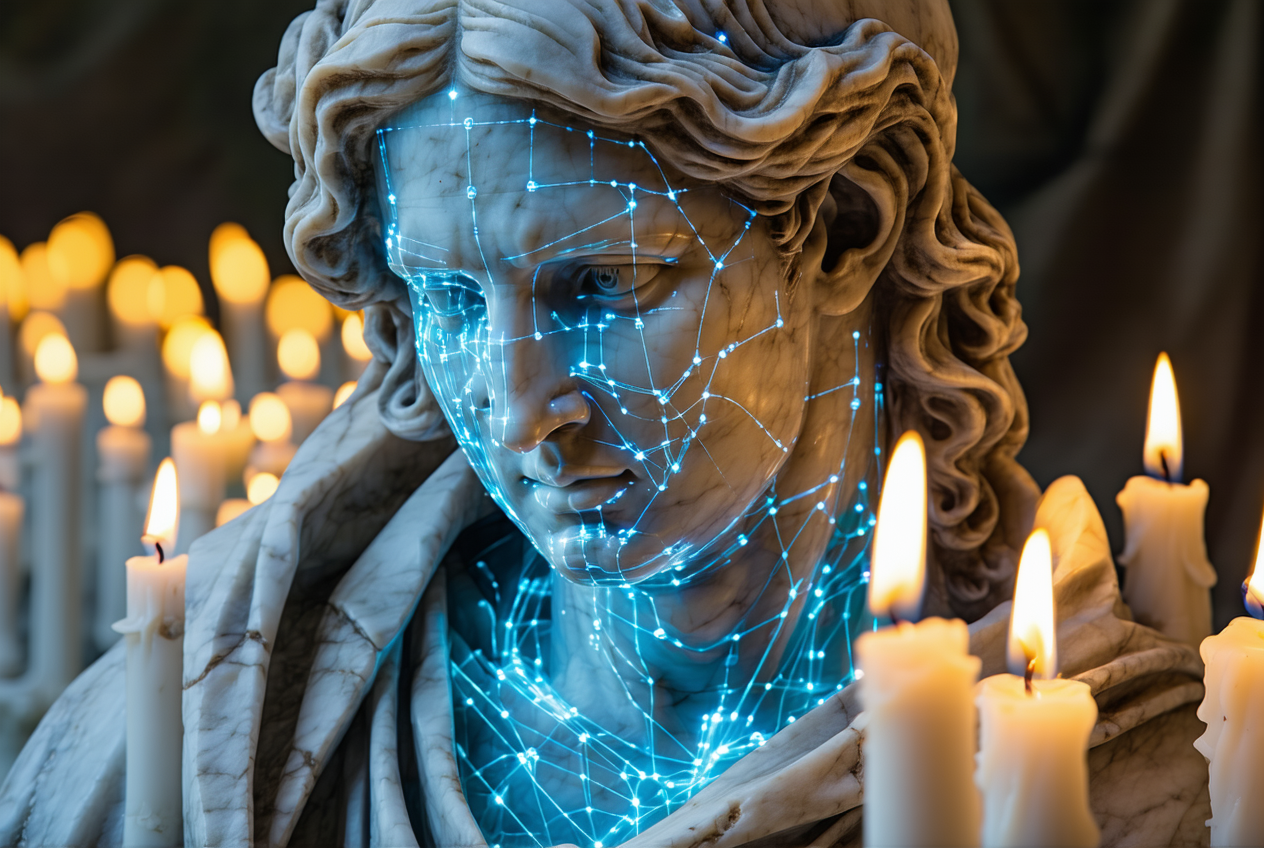
The Vatican just dropped a 42,000-word reality check on the tech industry, and it isn’t the typical "luddite" sermon you might expect. Pope Leo XIV, the first American to hold the keys to St. Peter’s, released his debut encyclical, Magnifica humanitas (Magnificent Humanity), on May 25, 2026. While the world was busy arguing over the latest H200 benchmarks or the newest open-source LLM weights, the Pope decided to take a swing at the very soul of the digital revolution.
This document is less about theology and more about a systematic deconstruction of the current AI trajectory. It positions AI as the "new industrial revolution" and warns that we are sleepwalking into a world where efficiency is the only metric that matters. For those of us in the tech space, it’s a polarizing read. On one hand, you have a globally influential figure calling for the "disarming" of AI; on the other, you have a tech-heavy reality where slowing down for even a month could mean obsolescence.
The Core Pillars of Magnifica Humanitas
Pope Leo XIV didn’t just provide a vague "be good" guide. He broke the AI impact down into specific sectors that mirror the exact debates happening on Reddit and in Silicon Valley boardrooms right now.
1. Education and the Death of the Question
One of the most striking chapters deals with how AI is changing the way we think. The Pope argues that the speed of AI-generated answers is "extinguishing the desire to ask questions." He cites Plato’s Seventh Letter to argue that true wisdom requires the friction of effort and time.
In the Pope’s view, if a student can get a perfect summary of a complex philosophical text in three seconds, they lose the "fruit of the process." He’s calling for a radical form of "restraint" in classrooms. While the industry is pushing "AI tutors" as the ultimate equalizer, the Vatican is worried we’re producing a generation of people who know how to prompt but don't know how to think.
2. The "Disarming" of AI and Autonomous Warfare
The encyclical takes a hard line on the military-industrial complex. Leo XIV uses the phrase "disarming AI" to describe a decoupling of technology from purely "armed" competition. This isn't just about killer robots (though he explicitly calls for a ban on autonomous weapons systems that lack a human "finger on the trigger"). It’s about the "mentality of competition" that drives companies to ship unsafe models just to beat a rival to a quarterly earnings goal.
3. New Forms of Digital Slavery
In a move that surprised many, the Pope issued a formal apology for the Church's historical role in slavery and then immediately linked it to the modern tech economy. He points to the "ghost work" that powers AI: the millions of people in developing nations who spend ten hours a day labeling toxic content or training models for pennies. He calls this a "new form of slavery" hidden behind a clean API.
4. Truth as a Casualty of Democracy
The document identifies disinformation as a "totalitarian" threat. Leo XIV argues that when AI can manufacture reality (deepfakes, synthetic voices, and biased algorithms) the concept of "truth" becomes a luxury. He warns that a society indifferent to truth is a society ripe for a dictator. This echoes the concerns of many security researchers who see the 2024 and 2026 election cycles as "test beds" for AI-powered psychological operations.
5. The Environmental Debt
Finally, the Pope calls out the physical cost of the cloud. Data centers are gobbling up water and energy at rates that contradict global climate goals. He challenges the "infinite growth" narrative of Big Tech, asking if the utility of a new chatbot justifies the massive carbon footprint of training it.
The Progress Paradox: Can We Regulate Without Stifling?
There is a lot to like in Magnifica humanitas. The emphasis on human dignity is a necessary counterweight to the "move fast and break things" ethos. However, we have to be realistic about the "progress paradox."
Ethics are important, but we cannot stifle the growth of this technology unduly. If the West slows down its AI development to meet every single moral requirement the Vatican proposes, we don't just lose market share; we lose the ability to set the global standard for safety. If the most "ethical" players are the ones who move the slowest, the vacuum will be filled by actors who have zero interest in "magnificent humanity."
Innovation is a messy, iterative process. You can't always build the safety rails before you know how fast the train can go. There’s a risk that the "responsible care" the Pope calls for could become a "regulatory capture" mechanism that only the biggest companies (the "New Sovereigns") can afford to navigate, effectively killing off the open-source movement that has been the most democratic part of the AI boom so far.
What the "Overlords" are Saying
The Vatican didn’t write this in a vacuum. They’ve been hosting industry leaders for years. At the release of the encyclical, figures like Chris Olah from Anthropic and Taylor Black from Microsoft were present.
- Anthropic's Stance: The "Constitutional AI" approach used by Anthropic is actually cited (obliquely) in the document. Leaders like Dario Amodei have long argued that we are facing a "race to the bottom" on safety. They generally support the Pope’s call for international frameworks, provided they aren't so restrictive that they hand the keys to authoritarian regimes.
- The Safety Skeptics: Not everyone is on board. Some industry leaders argue that the "existential risk" and "overlord" talk is a distraction from the actual, boring problems of AI, like copyright and data privacy. They see the Vatican’s move as a play for relevance in a world that is becoming increasingly secular and tech-driven.
- The "Overlord" Fear: The Pope’s warning about power being concentrated in the hands of "small but highly influential groups" hits home. When five companies control the compute, the data, and the models, they essentially become the new state. Industry leaders like Sam Altman have acknowledged this, often calling for a "Global AI Observatory" or an IAEA-style body to manage the risk.
The Verdict: A Necessary Friction
Magnifica humanitas is a heavy read, but it’s a necessary one. It forces us to ask if we are optimizing ourselves for the machines or making the machines work for us.
While I believe the Pope's call to "slow down" might be technically impossible in a competitive global market, his focus on the "magnificence" of human limitation is a perspective the tech world desperately needs. We are so obsessed with "fixing" human flaws, such as aging, illness, slow learning, that we forget those flaws are often where empathy and wisdom come from.
We don't need to stop progress, but we do need to make sure that "progress" actually leads somewhere we want to live.