Google Playground: What Happens When AI Builds Your Game for You
Google's new AI-powered Playground lets anyone create games through text prompts. But is this the future of game development, or just another experiment destined for the Google graveyard?

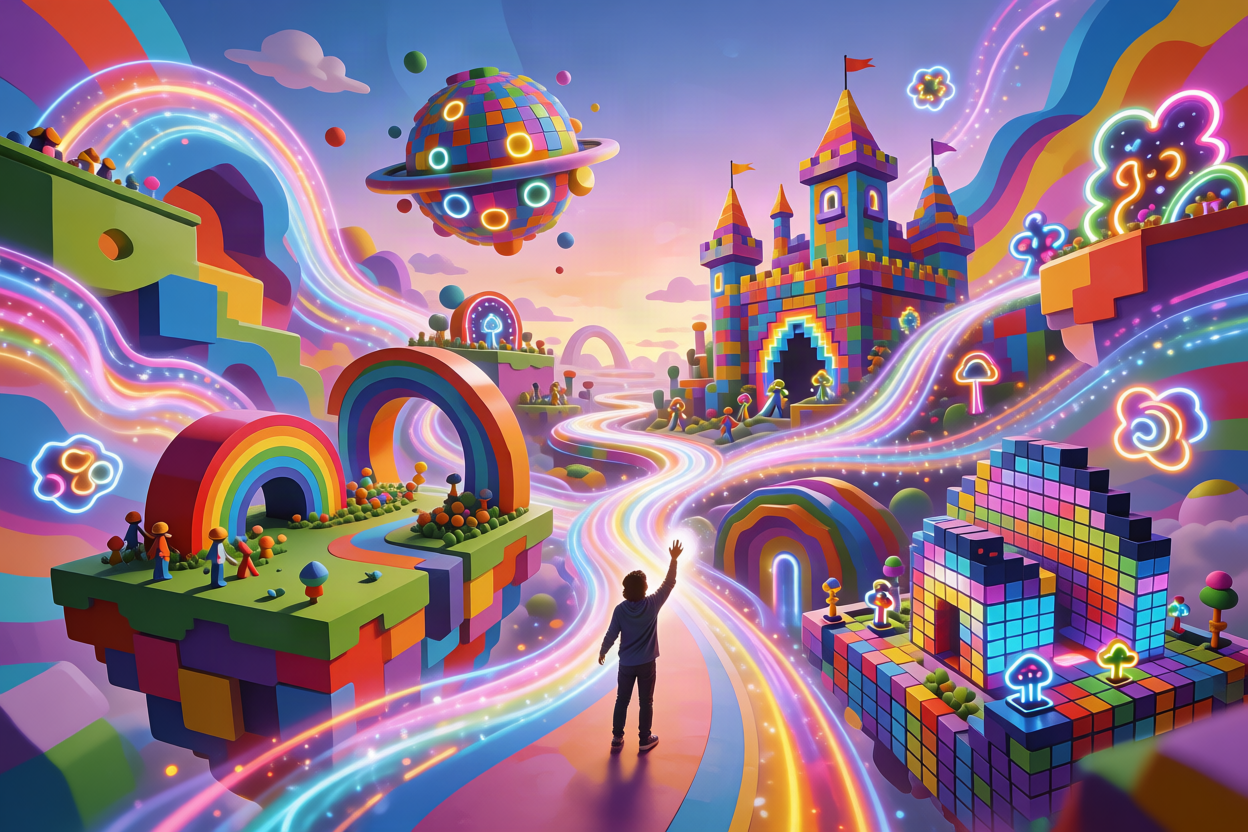
Google has a complicated history with gaming. Stadia was supposed to revolutionize cloud gaming. It didn't. Now the company is back with a different angle: Playground, an experimental AI platform that lets anyone create games through natural language prompts, no coding required.
The service launched in the US on October 7, and it's clear Google learned something from the Stadia debacle. Instead of trying to compete with established consoles and PC gaming, Playground targets an entirely different audience, people who have ideas for games but lack the technical skills to build them. It is a browser-based platform where you describe what you want, and the AI generates the rest.
The concept is straightforward. Users start with a text prompt describing their game idea. They can build from scratch, remix existing starter templates, or get guided support. Follow-up prompts let you refine mechanics, adjust characters, and tweak environments. The AI handles the heavy lifting: generating assets, coding logic, and assembling a playable experience that runs directly in the browser on phones or laptops.
What makes Playground interesting is not just the technology but the business model behind it. Access is tiered by Google One subscription level. Free users get limited weekly tokens, while paying subscribers get more generous creation budgets. This immediately raises questions about whether the platform is truly democratizing game creation or simply creating a new paywall for creative expression.
Google is not alone in chasing this space, but its approach differs from existing no-code platforms in meaningful ways. Roblox still requires Lua scripting for anything beyond basic experiences. Media Molecule's Dreams demands time investment to learn its creation tools. Playground strips away nearly all friction. You type what you want, and it appears. That could be transformative for casual creators, but it also risks flooding the platform with low-effort content that nobody wants to play.
The company has tried to address quality concerns by building a community gallery where players can rate and discover games. Published creations undergo safety screening aligned with Google's community standards. Leaderboards and multiplayer features are available for eligible titles. These guardrails suggest Google understands the moderation challenges ahead, though managing a user-generated content platform at scale is notoriously difficult.
The more ambitious piece of this announcement is Google's partnership with Unity. Later this year, the two companies plan to launch Unity Spark, which will bring professional-grade 3D capabilities and Unity's runtime to the platform. This represents a significant upgrade path. Creators who start with simple prompt-based games could eventually graduate to more sophisticated projects using industry-standard tools, all within the same ecosystem.
The implications extend beyond Google's corporate strategy. According to recent industry data, roughly one-third of game developers already use generative AI in some capacity. Playground accelerates that trend by removing the developer part entirely. You do not need to know how to code, model, or animate. You just need an idea and the ability to describe it.
This is where things get complicated. The platform sits at the intersection of several ongoing debates. Will AI-generated games cannibalize the market for human-created indie titles? Can a prompt-based system produce experiences with genuine emotional depth and mechanical innovation? And perhaps most practically, will anyone actually play these games, or will Playground become a toy people use once and forget?
Google's track record suggests healthy skepticism is warranted. Stadia launched with enormous hype and shut down within three years. Google Plus was supposed to fix social networking. Google Glass was the future of computing. The company has a habit of launching ambitious projects and abandoning them when adoption does not meet expectations.
Playground feels different in one respect: it requires minimal infrastructure investment compared to a global cloud gaming service. The AI models already exist. The browser-based delivery eliminates hardware manufacturing and complex server networks. If it fails, Google can sunset it without the same level of embarrassment that accompanied Stadia's shutdown.
For Unity, the partnership is arguably more consequential. The engine company has faced questions about how generative AI might eventually make its core software less necessary. By embedding Unity's technology into an AI-first creation platform, the company positions itself as infrastructure for the next wave of game development rather than a tool that gets displaced by it.
The broader trend here is clear. AI is systematically dismantling technical barriers across creative industries. Image generation removed the need for artistic training. Music generation eliminated the requirement to play instruments. Now Playground is doing the same for interactive experiences. The question is not whether this technology will improve, because it will. The question is what kind of culture emerges around it.
Early no-code platforms produced their share of mediocre content, but they also enabled creators who would never have built otherwise. The same dynamic will likely play out here. Most Playground games will be forgettable. A few might be genuinely novel. And somewhere in that long tail, someone will create something that changes how people think about what games can be.
Google is betting that the volume of creation matters more than the average quality. Whether that bet pays off depends on whether people show up to play, not just to build. Stadia proved that great technology means nothing without an engaged community. Playground's ultimate test is the same.
For now, it is an interesting experiment worth watching. If you are in the US and over 18, you can try it yourself. Just do not expect the next Hollow Knight or Hades to emerge from a text prompt. Not yet, anyway.