Anthropic Released Blueprints for AI Shopping Agents. Here's Why That Matters.
Anthropic is giving retailers the tools to build their own AI shopping agents. It's a bet against the platform-owned models from Meta and Amazon.

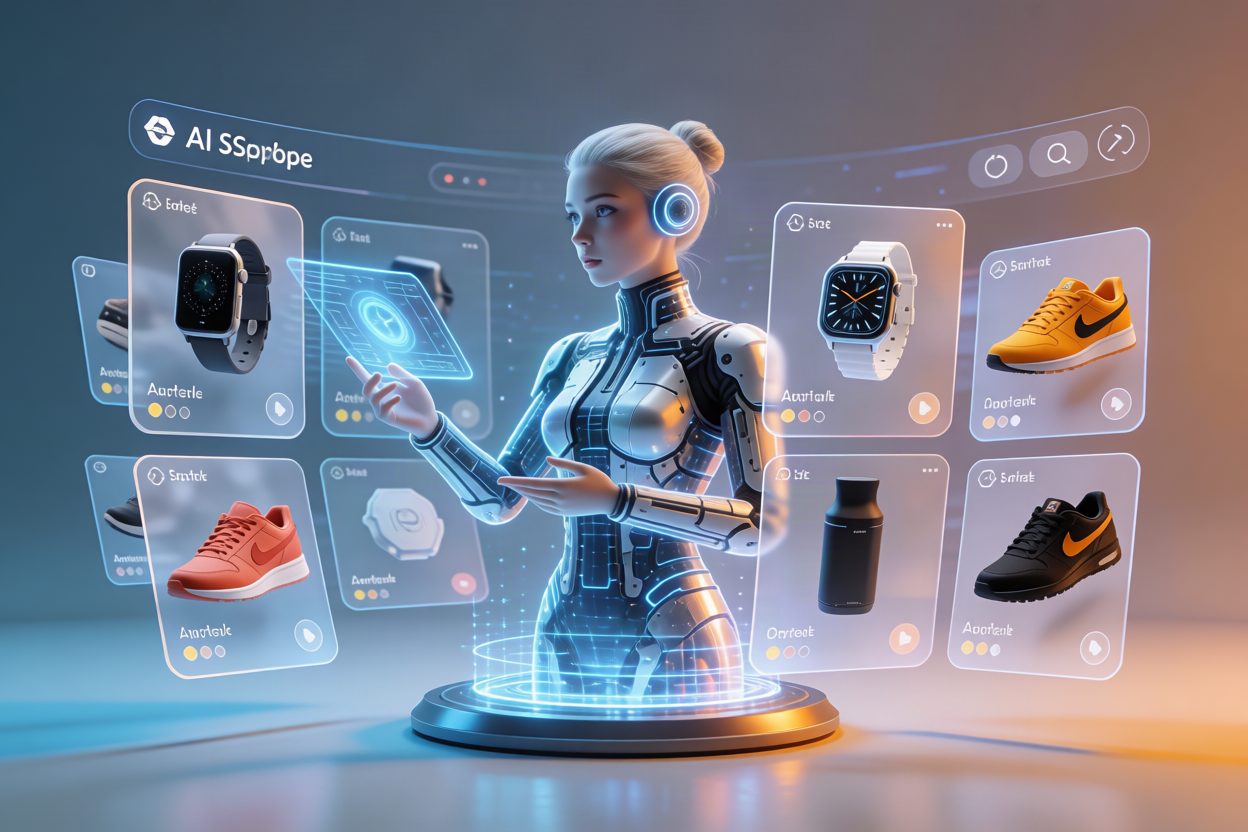
AI agents have been great at writing emails, summarizing documents, and generating code. But shopping? That was always the line in the sand. After all, nobody wants an AI "hallucinating" a pair of shoes and charging your credit card.
Well, Anthropic just crossed that line.
This week, the company behind Claude released blueprints for Claude-based shopping and merchant agents. These aren't hypothetical demos or research papers. They're production-ready frameworks that let retailers build AI agents capable of searching for products, comparing options across catalogs, adding items to carts, and connecting with checkout systems, all while keeping transactions inside the retailer's own infrastructure.
The timing is deliberate. Agentic commerce is no longer a concept. It's a land rush.
Three Approaches, One Shopping Cart
Three major players are now live with agentic commerce, and the differences matter because they define who controls the customer relationship.
Anthropic is taking the open-platform approach. It gives retailers the tools to build their own branded shopping agents. The checkout stays in the retailer's system. The data stays with the retailer. The agent acts as a smart assistant that lives on the merchant's site or app, not as an external broker. For retailers, this is appealing because they retain ownership of the customer journey and the data that comes with it.
Meta went the opposite direction. Its Muse agent, launched earlier this week, operates as an independent shopper that browses the open web, fills out forms, and completes purchases on external merchant sites. Payment runs through Stripe Link, and Muse can check out at over a million merchants without any merchant integration. It's powerful, but it also means Meta sits between the customer and the retailer, capturing data and influence that merchants would rather keep.
Amazon is doing what Amazon always does: building a closed ecosystem. Alexa for Shopping keeps discovery and purchase entirely within Amazon's walls. It's the most controlled experience, and for Amazon, the most profitable.
The market is bifurcating between platforms that empower merchants and platforms that disintermediate them. Anthropic is betting retailers will prefer the former.
The Technical Details Matter
Anthropic's blueprints include reference implementations for both shopping agents (the consumer side) and merchant agents (the retailer side). The shopping agent blueprint covers product search, comparison, cart management, and checkout integration. The merchant agent blueprint handles inventory queries, pricing logic, and order fulfillment hooks.
Importantly, Anthropic is emphasizing guardrails. Every transaction requires explicit user confirmation. The blueprints include frameworks for pricing transparency, so the agent can't silently swap in a more expensive option or hide fees. There's also a Claude Code plugin to help developer teams build and customize these experiences for specific retail verticals like travel, telecom, and ticketing.
This is a direct response to the single biggest concern about agentic commerce: trust. If an AI is going to spend your money, you need to know exactly what it's doing, why it's doing it, and how to stop it.
Why Now?
The market is ready. A Mastercard report published this week predicts more than one in ten online shoppers will routinely use AI agents to shop and pay by 2030. Morgan Stanley's estimate is even more aggressive: half of all consumers. Those numbers sound speculative until you consider how quickly AI adoption has accelerated in other domains.
The infrastructure is also ready. Payment processors like Stripe have already built the rails for agentic checkout. Merchant platforms like Shopify and WooCommerce have APIs that can handle automated inventory queries and cart operations. What's been missing is the intelligence layer, the part that actually understands what a shopper wants, finds it across a fragmented web, and makes a decision.
That's what Claude is supposed to provide.
The Attribution Problem Nobody Has Solved
There is a catch, and it's a big one. If an AI agent navigates directly to a product page and completes a purchase, where did that customer come from? The affiliate link that would normally tell you a creator referred the sale? Gone. The comparison site that sent the traffic? Invisible. The paid ad that sparked the interest? Untraceable.
This isn't just a tracking problem. It's a business-model problem for publishers, influencers, and the entire affiliate economy. An agent operating its own browser looks like direct traffic in your analytics, even when it's not.
Meta's Muse makes this worse by operating across the open web. Anthropic's merchant-hosted approach at least keeps the interaction on the retailer's domain, where existing analytics and attribution tools still function. But as agentic commerce scales, the entire digital marketing stack, from cookies to pixels to affiliate networks, will need to be rethought.
What This Means for Shoppers
For consumers, the pitch is straightforward. You tell Claude what you need: "Find me a lightweight camping tent under $300 that's good for two people and packs down small." The agent searches, compares specs, checks reviews, narrows it down to three options, and presents them with reasoning. You pick one, confirm the price, and it checks out using your saved payment method.
No more tab-hopping. No more comparison spreadsheets. No more wondering if you missed a better deal on site B because you were already exhausted from site A.
But there's a flip side. When your agent is doing the browsing, you're not seeing the retailer's homepage, their curated collections, their upsells, or their brand experience. You're outsourcing discovery to an algorithm that optimizes for price and specs, not serendipity.
The Bottom Line
Anthropic's commerce blueprints are significant because they represent a credible, merchant-friendly alternative to the platform-owned agent models from Meta and Amazon. Whether retailers adopt them at scale depends on execution, but the framework is there.
For the rest of us, the takeaway is simple: the way we shop online is about to change fundamentally. The question isn't whether AI agents will buy things for us. It's who controls the agent, who owns the data, and who gets paid when the transaction happens.
Those are questions worth watching closely.